Stainless Steel vs Aluminum: Choosing the Best Material for Your Security Screens
When you decide to invest in your home's safety, you quickly realize that not all protection is created equal. For many homeowners, the choice often boils down to two main materials: stainless steel vs aluminum.
Selecting the right material for your doors and window screens isn't purely aesthetic. It’s also about understanding how these metals perform under pressure, withstand extreme heat, and resist the persistent attempts of intruders. While both metals have their place in modern architecture, their roles in home security differ significantly.
This guide explores the differences between stainless steel security screens and aluminum security screens, helping you determine which investment offers the best protection for your family.
What Is an Aluminum Security Screen?
Aluminum is one of the most common materials used in the home improvement industry. Known for being lightweight and highly resistant to corrosion, it’s a staple for window frames, gutters, and siding.
In the world of security, aluminum is often used in two ways: as the structural frame of a door or window and, in some products, as the perforated mesh itself.
The Role of 6063-T5 Aluminum
Most high-quality security frames utilize 6063-T5 extruded aluminum. This specific alloy is often referred to as "architectural aluminum" because it offers an excellent balance of strength, surface finish, and corrosion resistance. It’s easy to shape into complex profiles, allowing for sleek, modern designs that don’t look like burglar bars.
Pros and Cons of Aluminum Screens
- Pros: It’s naturally rust-proof due to a protective oxide layer, making it ideal for humid environments. It’s also more affordable upfront compared to high-tensile steel options.
- Cons: While aluminum is tough, it’s a softer metal than steel. In a security context, an all-aluminum mesh is more susceptible to being cut with heavy-duty shears or bent under sustained prying.
What Is a Stainless Steel Security Screen?
A stainless steel security screen represents the "gold standard" of physical home protection. These screens typically utilize a high-tensile, woven wire mesh that is integrated into a heavy-duty frame.
Understanding Mesh Grades: 304 vs. 316
Most security screens on the market use either 304 or 316 grade stainless steel.
- 304 Stainless Steel: This is the most common grade for residential security. It contains 18% chromium and 8% nickel, providing a high level of strength and excellent corrosion resistance for inland environments like Arizona and New Mexico.
- 316 Stainless Steel: Often called "marine grade," this alloy includes molybdenum, which offers superior protection against salt-air corrosion in coastal regions.
Stainless Steel vs Aluminum: A Direct Comparison
To choose the right screen for your home, you must compare how these materials stack up in the categories that matter most: strength, weather resistance, and visibility.
1. Raw Strength and Impact Resistance
When it comes to stopping an intruder, strength is the only metric that matters. Stainless steel is significantly denser and harder than aluminum.
- Stainless Steel: High-tensile stainless steel mesh is designed to absorb massive amounts of energy without tearing. It’s often tested against "knife shear" tests, where a heavy blade is dragged across the mesh under pressure.
- Aluminum: While structural-grade aluminum is strong, it typically lacks the "memory" of steel. If an intruder kicks an aluminum screen, it may dent or deform permanently, whereas stainless steel mesh is designed to withstand the impact and maintain its shape.
Corrosion and the Southwest Climate
Homeowners in the Southwest face unique environmental challenges. The intense UV radiation in Phoenix and the seasonal monsoons require materials that won't degrade.
- Aluminum: This metal is the king of corrosion resistance. It forms a natural shield that prevents rust even if the powder coating is scratched.
- Stainless Steel: While highly resistant, 304 stainless steel can experience "tea staining" (minor surface discoloration) if not cleaned periodically in very dusty or polluted environments. However, for most Southwest residents, the high-tensile strength of 304 steel far outweighs the minor maintenance required to keep it looking new.
3. Visibility and Airflow
A common fear for homeowners is that security screens will block their view or make their home feel "closed in."
- Stainless Steel: Because the wire is so strong, it can be woven into a much finer mesh while still maintaining its security rating. This allows for nearly 100% visibility from the inside out and maximum airflow.
- Aluminum: Because aluminum is a softer metal, the mesh often has to be thicker or perforated (stamped with holes) to achieve a similar security rating. This thicker material can obstruct your view and significantly reduce the amount of breeze that enters your home.
4. Maintenance Requirements
Both materials are considered "low maintenance," but they aren't "no maintenance."
- Aluminum: Requires a simple wipe-down every 3 to 6 months to remove salt and dust buildup.
- Stainless Steel: Benefits from a quick wash with mild soap and water to maintain its luster and ensure that airborne contaminants don't settle on the surface.
The Cost-Benefit Analysis: Initial Investment vs. Long-Term Value
It’s no secret that a stainless steel security screen typically carries a higher price tag than an aluminum one. However, smart homeowners view this as a long-term investment rather than a one-time expense.
Let's break it down:
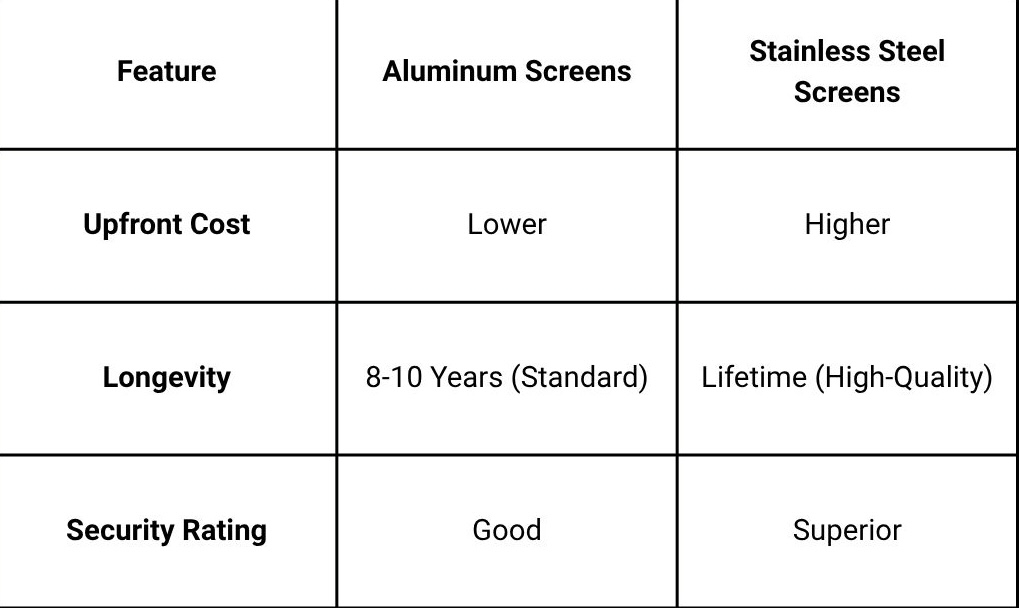
- Upfront Cost: Aluminum screens have lower upfront costs compared to stainless steel screens.
- Durability: Stainless steel has exceptional durability, and aluminum screens are only moderately durable.
- Longevity: While it'll depend on the quality of the individual screen, aluminum typically lasts for 8-10 years and stainless steel can last for a lifetime.
- Security Rating: Aluminum is good for security, but stainless steel is better.
The "Hybrid" Solution: Why the Combination Matters
If stainless steel vs aluminum is the debate, the best answer for most homeowners is actually a combination of both.
The most effective security products on the market, utilize a 6063-T5 extruded aluminum frame to house a 304 high-tensile stainless steel mesh.
This hybrid approach provides:
- The Strength of Steel: The mesh provides the impenetrable barrier that stops intruders and withstands hurricane-force impacts.
- The Versatility of Aluminum: The frame remains lightweight, rust-proof, and can be powder-coated in a variety of colors to match your home's existing trim.
How Bulldog Security Screens Can Protect Your Home with Both
Choosing the right material is the first step, but the way those materials are manufactured and installed is what truly determines your home's safety. At Bulldog Security Screens, we don't believe you should have to choose between the benefits of stainless steel vs aluminum.
The Bulldog Advantage
Our security screens are custom-engineered to provide the highest level of protection available in the Southwest:
- Impenetrable 304 Stainless Steel Mesh: We use a tightly woven, .035-gauge 12x12 stainless steel mesh. This is significantly stronger than standard screens and is built to withstand Category 4 hurricane impacts.
- Architectural-Grade Aluminum Frames: Our frames are constructed from heavy-duty 6063-T5 extruded aluminum, ensuring they stay rust-free and structurally sound for a lifetime.
- Locally Manufactured: We build our screens right here in Tucson, AZ, specifically for the extreme heat and environmental conditions of the Southwest.
- Security with a View: Our high-tensile mesh is so fine that you’ll barely notice it's there. You get the airflow and visibility of a standard screen with the security of a steel vault.
- Guaranteed Protection: We are so confident in our materials that we offer a Home Security No Break-In Guarantee and a Lifetime Warranty on all our installations.
Protect Your Home Today
Don't wait for a "crime of opportunity" to expose the vulnerabilities in your home's entry points.
Contact Bulldog Security Screens today for a free custom quote. We’ll help you assess your home’s needs and show you why our blend of high-strength stainless steel and durable aluminum is the best choice for your family’s safety.
Recent Posts
- Comprehensive Residential Physical Home Security Guide
- The Homeowner’s Guide to Home Security Costs: What to Expect in 2026
- Stainless Steel vs Aluminum: Choosing the Best Material for Your Security Screens
- Home Security Guide for Snowbird Residents: Prevent Break-Ins
- The Hidden Costs of a Break-In – Why Prevention Is Cheaper